


BUSINESS AVIaTION
MARKET BRIEF

OVERVIEW

While the geopolitical situation contributed to economic uncertainty in Q1, market fundamentals remained healthy.

The quarter showed strong demand for business aviation, reflected in increasing aircraft departures, OEM backlog, and stable pre-owned availability. Transaction levels declined year over year in Q1 as a result of supply chain constraints and comparison with a strong Q1 2025. Delays in data reporting have also impacted transaction levels. The business jet market is expected to remain resilient throughout the remainder of 2026.

GettyImages-820819806

Q1 2026 HIGHLIGHTS

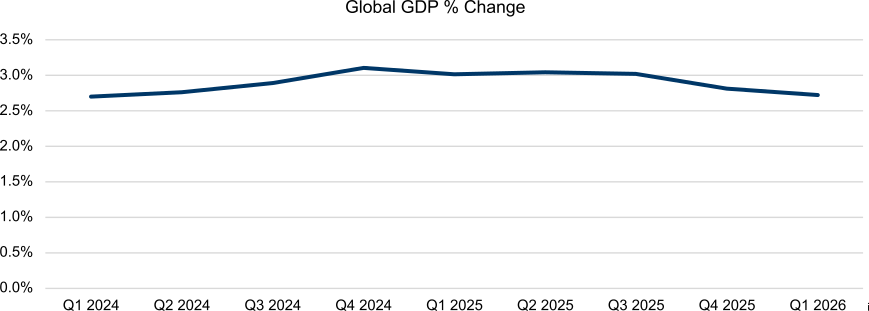
  • In Q1 2026, the global economy remained resilient with steady GDP growth of 2.7 percent despite the conflict in the Middle East.
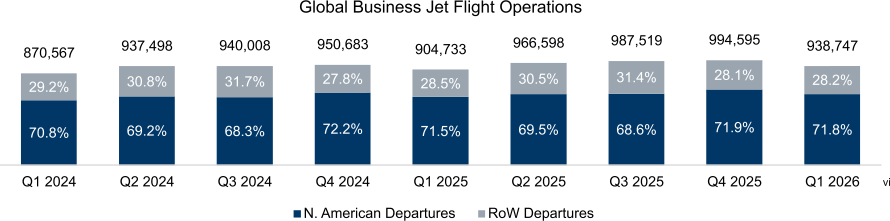
  • Business jet departures experienced broad-based growth in Q1, rising 3.8 percent year over year.
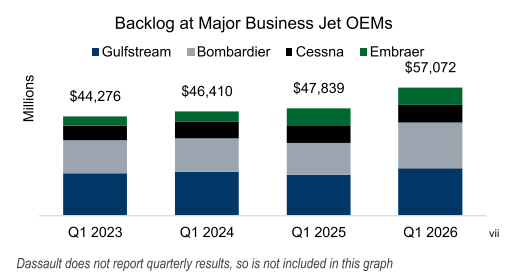
  • OEM backlogs rose 19.3 percent year over year in Q1 2026, reaching $57.1 billion for the four OEMs that reported Q1 results.
  • Transaction activity was softer in Q1, largely reflecting timing-related delays in data reporting.
  • Pre-owned aircraft available for sale as a percentage of the total installed base was lower in Q1 2026 than Q1 2025, declining to 6.7 percent from 7.2 percent.
  • In Q1 2026, bluebook values increased 1.1 percent, reflecting modest industry-wide appreciation on a year-over-year basis, although there was variance across segments and models.

GLOBAL ECONOMY

i

Following a period of stabilization in late 2025, the global economy was resilient during Q1 2026 despite geopolitical developments in the Middle East. While Brent Crude oil prices rose 106.5 percentii and the U.S. Volatility Index (VIX) increased 68.9 percentiii between the close of Q4 2025 and the end of Q1 2026, the broader economic foundation remained firm.

Despite certain regional complexities, the global economy remained on steady footing, with global GDP demonstrating a year-over-year growth rate of 2.7 percent.iv

Going forward, analysts expect the global economy to remain resilient so long as there is no material change in the status of the Middle East conflict or its impact on energy markets. While businesses and consumers continue to monitor oil transit and inflation related to energy prices, economists anticipate that growth will remain consistent with long-term projections, despite slight downward revisions since the beginning of the year. For example, the IMF’s April 2026 World Economic Outlook report projects a global GDP expansion of 3.1 percent for the calendar year, a decline of 0.2 percentage points since their January 2026 forecast.v

With steady economic growth and the wealth creation that accompanies it, the business jet market should be well supported in 2026.

FLIGHT OPERATIONS

vi

Demand for business aviation has grown consistently since mid-2024. In Q1 2026, business jet departures increased 3.8 percent year over year. With the Middle East experiencing regional complexities, North America led global growth, with departures increasing 4.3 percent year over year. Growth in the rest of the world remained steady, with departures increasing 2.5 percent year over year. Fractional operations remained the leading growth segment, posting solid gains throughout the quarter.

Departures in Q1 2026 decreased 5.6 percent from Q4 2025, in line with historical seasonal patterns. Following a strong 2025, departures in Q1 2026 remain high by historical standards. Departures were 5 percent higher than in Q1 2022, which was a period of historically high usage.

This strong performance reflects the consistent expansion of the business aviation user base over the past five years. Supported by the industry’s core value propositions — personal safety, flexibility, productivity, and comfort — flight operations are expected to remain steady in 2026.

OEM BACKLOGS

OEM-Backlog


OEM backlogs rose 19.3 percent year over year in Q1 2026, reaching $57.1 billion (excluding Dassault, which does not report Q1 results). Orders were driven in part by fleet operators as well as demand from private users. The four manufacturers that reported Q1 results indicated that deliveries increased year over year in the quarter as they continued to address supply chain and labor issues. Even as deliveries increased, there was continued strong demand for new business jets, with orders keeping pace and the industry-wide book-to-bill ratio rising above 1-to-1. With lead times among major manufacturers remaining between 18 and 24 months on average, OEMs can sustain current delivery levels throughout 2026 while maintaining a healthy backlog.

TRANSACTIONS ($ VOLUME)

4 YTD Biz Jet Transactions

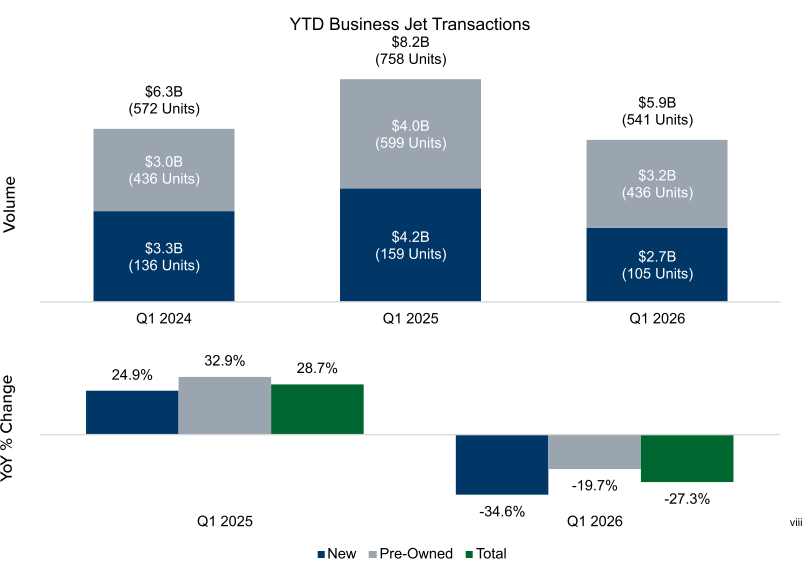
Note that the latest figures from 2026 reflect preliminary data and may increase as more transactions are reported to data providers.

Based on available data, Q1 2026 transaction dollar volume decreased by 27.3 percent compared to the same period in 2025. This downturn follows an active end to 2025, when Q4 transaction dollar volume increased by 19.3 percent year over year.

This decline reflects real trends in the market, including continued supply chain and labor constraints. However, analysis of other data sources, including OEM reports and our own field intelligence at Global Jet Capital, indicates that a significant proportion of the decline may be attributable to delays in official data reporting. As additional transactions are reported, we expect Q1 2026 results to fall more in line with historical trends.

New deliveries as reported declined in Q1, with unit volume falling 34 percent and dollar volume decreasing 34.6 percent. As additional transactions are reported, however, we expect that final Q1 transaction data will show an increase in new deliveries. While isolated pockets of supply chain and labor constraints remain an issue, OEM commentary reflected continued progress towards resolution.

Pre-owned transactions followed a similar trend in Q1 2026, with unit volume down 27.2 percent and dollar volume down 19.7 percent year over year. In addition to data reporting delays, this decrease is partly attributable to a comparison with an unusually active Q1 2025. During that period, some buyers accelerated transactions to finalize deals ahead of anticipated U.S. tariff implementation, creating a peak that was followed by a dip in Q2 and a strong second half. In Q1 2026, there was no similar pressure to front-load transactions, resulting in market volume that was more consistent with Q1 2024 levels. Still, there were continued signs of strong buyer interest, suggesting transaction volume will normalize over the remainder of the year.

FOR SALE INVENTORY

ix

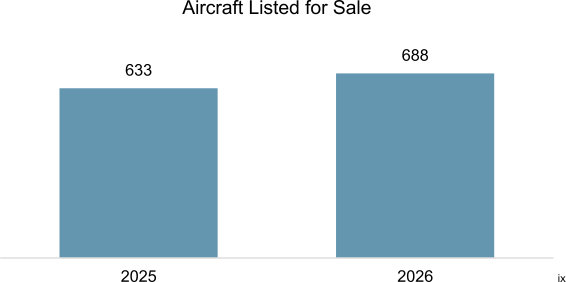
Aircraft listings increased 8.7 percent year over year in Q1 2026, following a 5.8 percent decline in 2025. This was driven by a 27.9 percent jump in new listings in February, while January and March were flat compared to year-ago levels.

Aircraft listings have shifted over the past few years. In 2021, strong market activity led to many transactions involving unlisted aircraft, contributing to a 25.3 percent drop in public listings compared to 2019. From early 2022 through mid-2024, however, sellers gradually returned to publicly listing their aircraft, bringing activity back in line with historical norms and increasing new listings. As demand picked up in late 2024 and into 2025, public listings declined again.

While the overall number of aircraft listings has shifted, the composition of those listings has changed as well. Newer aircraft now account for a smaller share of new listings. In Q1 2021, aircraft 12 years old and younger comprised 35.8 percent of all new listings. By Q1 2026, following a 5.6 percent year-over-year decrease, listings of younger aircraft represented 26.7 percent of all listings. In contrast, aircraft 13 years old and older have driven listings in recent quarters, accounting for 73.3 percent of all new listings in Q1 2026.

6 Percentage of Biz Jet Fleet for Sale


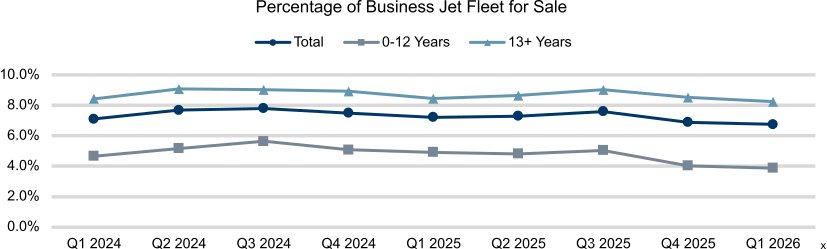
In Q1 2026, aircraft availability declined from 6.9 percent of the total fleet in Q4 2025 to 6.7 percent. Availability at the end of the quarter was also lower than the 7.2 percent recorded at the end of Q1 2025 and well below the historical average of roughly 10 percent. This period of stability followed a stretch of rising availability, as more aircraft were publicly listed during 2023 and 2024.

Availability among aircraft 12 years old and younger remained lower than that of older models in Q1 2026 at 3.9 percent of the fleet, down from 4.9 percent in Q1 2025. In comparison, availability of aircraft aged 13 years and older was 8.2 percent, a modest decline from 8.5 percent a year earlier.

The relationship between supply and demand is expected to remain balanced through the rest of 2026, with listings and availability continuing to track below historical averages.

RESIDUAL VALUE

7 YoY Change in Values

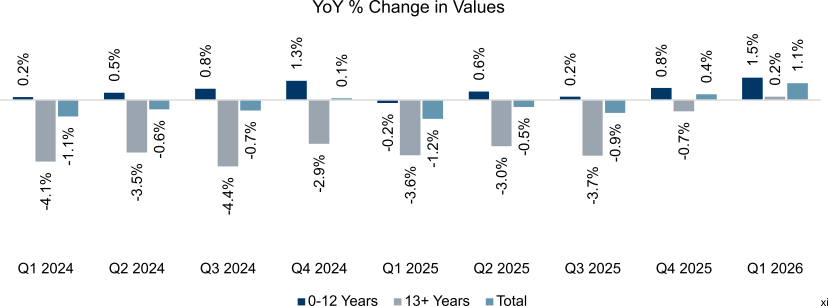
The above chart compares the year-over-year percentage change in the bluebook value of like-aged aircraft over time (e.g., the difference between the value of an eight-year-old aircraft from one year to the next). Global Jet Capital analyzes a basket of aircraft as a proxy for the overall market. Values vary on a model-by-model basis and observed increases or decreases in value are not necessarily applicable to any specific aircraft make/model. For the value of a specific aircraft, please contact a licensed aircraft appraiser.

In Q1 2026, aircraft bluebook values for like-aged aircraft increased 1.1 percent compared to Q1 2025, reflecting modest appreciation on a year-over-year basis. Over the prior quarter, aggregate values declined 1.5 percent, capturing the normal depreciation that occurs as the fleet ages. This sequential decline remains broadly consistent with historical depreciation patterns.

In 2023, aircraft availability normalized following a prolonged period of constrained supply. This shift restored balance between supply and demand and contributed to a period of relative price stability during 2024. Strong demand in 2025 led to aircraft availability declining once again, with values ticking up slightly in Q1 2026.

Value trends varied across the installed base in Q1 2026. As noted previously, the availability of older aircraft remained higher than that of younger aircraft. Consequently, values for aircraft aged 13 years and older were largely stable, increasing 0.2 percent during the quarter. In contrast, values for aircraft aged 12 years and younger rose at a somewhat faster pace, increasing 1.5 percent.

It is worth noting that business jets are depreciating assets and a steady decline in the price of an aircraft over its lifespan is to be expected. The market should transition away from the heightened activity observed in late 2025 towards more balanced and typical supply-and-demand conditions. Aircraft values are expected to remain stable in the foreseeable future, notwithstanding ongoing economic uncertainty.

\ CONCLUSION

The global economy faced uncertainty in Q1 2026 following the outbreak of conflict in the Middle East.

However, most economists expect global growth to continue at a steady pace, if slightly slower than previously expected, throughout the rest of the year. Additionally, there was little impact on demand for business aviation through the end of Q1, with business jet departures increasing 3.8 percent year over year in Q1 2026. OEM orders also increased, with manufacturers maintaining healthy backlogs for new deliveries while aircraft availability remained low. There were some headwinds affecting early-read aircraft transaction data, but as activity is reported, transactions are expected to follow historical trends. Overall, the business aviation industry is expected to remain resilient throughout the rest of 2026.


DID YOU KNOW AN OPERATING LEASE PROVIDES AN OWNERSHIP EXPERIENCE WITHOUT BEING IN THE FULL BUSINESS OF OWNING AN AIRCRAFT?

GLOBAL JET CAPITAL RECENT TRANSACTIONS

Global Jet Capital is a leader in the business jet financing market, providing leases and loans for both new and used aircraft. Our clients are diverse but all value flexible financing solutions for their aircraft. Below is a brief overview of a few recent transactions that Global Jet Capital has facilitated

RECENT TRANSACTIONS

Jet-icon
Jet-icon

RECENT TRANSACTIONS

Recognizing Global Jet Capital’s unique ability to accommodate the complexities of a multi-jurisdiction deal, this client turned to us to facilitate the acquisition of a highly desirable aircraft that aligned with their growing mission requirements.

Leveraging our deep expertise in global aircraft transactions and financing, we worked in close coordination with the client, the seller, and international financial institutions to navigate the intricate requirements of this cross-border deal. Despite a demanding timeline, GJC leaned into our experience to streamline the process and ensure all parties remained positioned for a successful closing. Ultimately, by tailoring a flexible structure to meet the client’s specific acquisition goals, we provided a solution that enabled them to secure the aircraft in a market with constrained availability, while remaining focused on their broader business objectives.


AIRCRAFT CLASS
Large

NEW/PRE-OWNED
Pre-Owned

REGION
Americas

FINANCIAL PRODUCT(S)
Loan


RECENT TRANSACTIONS

Jet-icon
Jet-icon

RECENT TRANSACTIONS

Seeking to upgrade their fleet to better support evolving operational requirements, a long-time client turned to Global Jet Capital for a strategic replacement solution.

Throughout the process, we worked in close collaboration with the client as they explored various aircraft types and financing structures and designed a financing package for the aircraft type that they selected that met their long-term goals. The client selected an operating lease for its inherent flexibility and the predictability regarding the aircraft’s disposition at lease end. Once a suitable aircraft was identified, we partnered with the client to quickly secure the asset and finalize the acquisition. By drawing on our deep industry relationships and commitment to efficiency, GJC streamlined the closing process and met the accelerated timeline. Our tailored approach ensured a seamless transition, allowing the client to move forward confidently while maintaining focus on their broader business objectives.

AIRCRAFT CLASS
Super-Mid

NEW/PRE-OWNED
Pre-Owned

REGION
Americas

FINANCIAL PRODUCT(S)
Operating Lease


RECENT TRANSACTIONS

Jet-icon
Jet-icon

RECENT TRANSACTIONS

Our client needed a new long-range aircraft to support their rapidly expanding operations.

To retain growth capital for their business, they partnered with Global Jet Capital to identify a financing solution - an operating lease minimizing their investment while providing future flexibility. To meet complex cross-border structuring and tax requirements, GJC applied our expertise in business aviation finance and built a relationship of mutual trust with all parties involved. This included working closely with the client's aircraft management company to develop a transaction structure balancing each party’s considerations. Leveraging our ability to execute efficiently under a demanding timeline, GJC streamlined the documentation and closing process and met the client's delivery date. Ultimately, our flexible solution enabled the acquisition of a valuable new asset while allowing our client to remain focused on their broader business growth.


AIRCRAFT CLASS
Ultra Long Range

NEW/PRE-OWNED
New

REGION
APAC

FINANCIAL PRODUCT(S)
Operating Lease

Notes

iOxford Economics,  iiU.S. Energy Information Administration iiiYahoo Finance ivOxford Economics vIMF World Economic Outlook, April 2026 viWingX and Global Jet Capital Analysis viiCompany financial reports and GJC Analysis. Dassault does not report quarterly results, so is not included in this graph. viiiJetNet and Global Jet Capital Analysis. Units are in parentheses. ixAmstat and Global Jet Capital Analysis xJetNet and Global Jet Capital Analysis xiAircraft Bluebook and Global Jet Capital Analysis 

LinkedIn-logo